
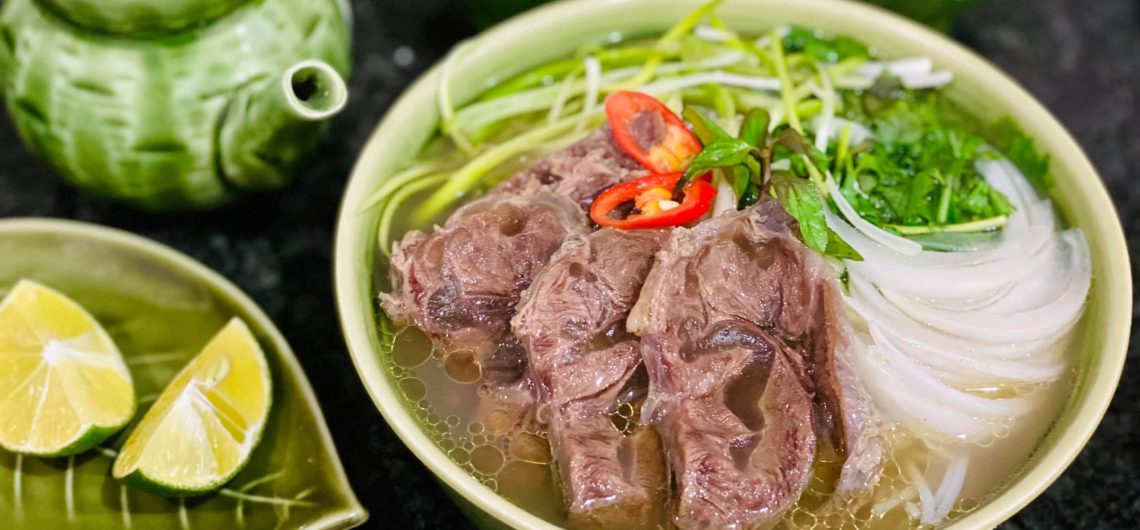
Phở is not just food in Vietnam — it’s a symbol of Vietnamese identity, culture and craftsmanship. People eat it in the morning, late night, during sunny to rainy days. It’s simple, yet deeply complex in flavor.
Origins of Phở
There are many controversial theories about the origin of Vietnamese pho. Some people believe that pho originated from the Cantonese dish “nguu nhuc phan”. Others believe that it originated from the Vietnamese dish “xao trau” (buffalo stew), which is a dish cooked with buffalo meat and rice noodles – the origin of beef pho. Another theory is that pho originated from the French beef stew pot-au-feu.
The most widely accepted theories about the origin of Phở is that it evolved from a traditional dish called xáo trâu (buffalo meat soup), which was once popular in old Hanoi. This theory is supported by the similarities in how the broth is prepared and how the meat is cooked in both dishes.
At that time, many soup-based dishes were generically referred to as “xáo”, such as xáo trâu (buffalo soup), xáo măng (bamboo shoot soup), or xáo gà (chicken soup). These dishes were typically served with rice noodles (bún) or flat rice crackers (bánh đa), and they were commonly sold at train stations and markets — favored by the working class.
Initially, xáo trâu was a humble meal for laborers. However, as French influence grew in Vietnam, beef consumption became more widespread. This led to the emergence of xáo bò (beef soup).
Over time, the Vietnamese adapted the dish: adjusting the seasoning to better suit local tastes, developing a refined broth, and replacing the traditional noodles with thinly sliced bánh phở (rice noodles). From this transformation, the now-iconic dish known as Phở was born.
Ingredients of 1 bowl of Phở
1. Broth – Soul of Phở
The broth is slow-simmered for hours — sometimes overnight — using a base of beef bones (or chicken), along with onions, ginger, and a blend of aromatic spices such as:
- Star anise
- Cinnamon
- Cloves
- Black cardamom
- Coriander seeds

The result is a clear yet deeply flavorful broth, known in Vietnamese as “ngọt thanh”, which refers to a naturally mellow and delicate sweetness that comes from bones and spices — not added sugar.
2. Rice noodles
Flat and soft rice noodles.
Fresh noodles are preferred, but dried ones are also used with proper soaking.
3. Meat
Beef: Beef is the most traditional and popular choice for Phở, with cuts such as rare beef, flank, brisket, tendon and tripe. Each type of beef has different characteristics and preparation methods to create a unique flavor for Phở.
- Rare beef: Is thinly sliced and is often added to pho while the broth is still boiling so that it can be cooked through before serving
- Flank: Usually thinly sliced and naturally sweet, flank is a popular choice for those who like beef with a bit of chewiness in Phở
- Brisket: Brisket is a fatty and well-textured cut of meat, often cooked thoroughly in Phở broth before being thinly sliced and served
- Tendon: Usually simmered to be soft and supple, tendon is a common ingredient in Phở in Vietnam.

Chicken:
- Often lighter, clearer broth
- Served with shredded or sliced poached chicken
- The meat can be breast or thigh

4. Toppings & Garnishes
An indispensable thing in a bowl of pho is the vegetables and spices served with it, helping the bowl of pho to be more flavorful.
- Chopped scallions
- White onion slices (sometimes pickled)
- Cilantro, Thai basil, sawtooth herb
- Lime, pickled garlic, fresh chili, bean sprouts, chili sauce

Some good Phở restaurant in Đồng Hới, Quảng Bình
- Phương Bắc: Thanh Niên street, Đồng Hới
- Phở Bê Quảng Bình: 77 Hai Bà Trưng street
- Phở Lành: 71 Lý Thường Kiệt street
- Phở Bắc: Triệu Quang Phục street
- Phở Gà Mạ Non: 13 Hai Bà Trưng street
- Phở Lý Quốc Sư: Nguyễn Hữu Thọ street
- Phở Hùng Râu: 42 Lý Thường Kiệt street

Conclusion
Nowadays, there are many variations of Phở such as: mixed Phở, fried Phở, pho rolls, Phở with beef stew sauce, dry Phở, sour Phở, goat Phở, duck Phở in Cao Bằng, and roasted meat Phở in the northern mountainous provinces, dry Phở in Gia Lai. Phở dishes are partly changed in cooking method, ingredients, and materials, making Phở more diverse and suitable for more people’s taste.
Phở is more than just a bowl of noodle soup — it’s a reflection of Vietnam’s history, culture, and culinary artistry. From its humble beginnings rooted in dishes like xáo trâu, Phở has evolved into a national symbol and a global favorite. Whether enjoyed on a bustling morning or in a quiet corner at night, each bowl tells a story of tradition, adaptation, and flavor.
Comments