
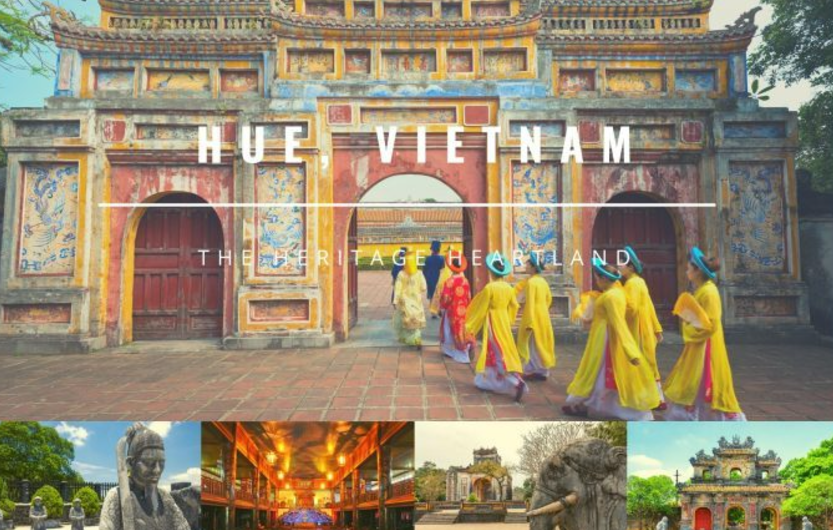
Overview of Hue’s History, Vietnam
Hue, located in central Vietnam, is a city with deep historical and cultural significance. It was the capital of unified Vietnam under the Nguyen dynasty from 1802 to 1945. The city is renowned for its imperial architecture, including the UNESCO-listed Imperial City (Đại Nội).
 Imperial tombs
Nguyen Dynasty (1802-1945): Hue became the center of power when Emperor Gia Long established it as the capital of the Nguyen dynasty. This period marked the flourishing of Confucian ideals, imperial governance, and the development of Vietnam’s cultural and political landscapes.
French Colonial Era (1883-1945): Though Hue remained the imperial capital during French colonization, its influence waned as the French imposed their control. The capital was later shifted to Hanoi, and the French impact on architecture and culture became evident.
Vietnam War (1955-1975): Hue suffered significant damage during the Tet Mau Than 1968. The city was the site of intense battles between North Vietnamese forces and the South Vietnamese army, supported by the United States. Much of its historic center, including monuments and temples, were destroyed.
Modern Era: After the reunification of Vietnam in 1975, Hue focused on preserving its heritage. Today, it stands as a symbol of Vietnam’s royal past and is a major cultural and tourist destination. Attractions such as the Thien Mu Pagoda and the Tombs of the Emperors highlight its historical significance.
Hue remains a testament to Vietnam’s rich royal history and continues to be a hub for cultural tourism, showcasing its ancient temples, palaces, and traditional music.
5 unique historical and culturally significant sites in Hue, Vietnam
Hue, the former imperial capital of Vietnam, is rich in history and culture, offering a wealth of significant sites that reflect the nation’s royal past and deep traditions. Here provides a comprehensive view of the royal history, spiritual traditions and cultural development of Hue over the centuries.
Hue Imperial City
The Hue Imperial City, also known as the “Citadel” (Đại Nội), is one of Vietnam’s most significant historical and cultural landmarks. The ancient capital of Vietnam, it served as the political, administrative, and cultural hub of the Nguyen Dynasty (1802–1945), the last imperial dynasty of VietnamThis place has been recognized as a world cultural heritage site in 1993. It offers a glimpse into imperial life, including royal costumes, court music (Nhã Nhạc), and traditional artifacts.
 Hue Imperial City
Designed based on principles of Feng Shui and traditional Vietnamese architecture.It is also influenced by the Forbidden City in Beijing, it combines Confucian, Buddhist, and traditional Vietnamese styles. The complex includes palaces, temples, gates, gardens, and courtyards, all surrounded by massive defensive walls and a moat.With Ngo Mon Gate is the majestic main entrance, reserved for the emperor during official ceremonies.
Thien Mu pagoda
When it comes to must-visit attractions in Hue, Thien Mu Pagoda is an absolute gem not to be missed. Thien Mu Pagoda, also known as the Pagoda of the Celestial Lady, is a historic temple located approximately 5 kilometers west of Hue’s city center, on Ha Khe Hill along the north bank of the Perfume River. Established in 1601, it stands as one of Vietnam’s oldest and most iconic religious sites.
 Thien Mu pagoda
We recommend for you visit in the early morning because it offer a serene atmosphere and cooler temperatures, ideal for exploring the pagoda and its surroundings. Alternatively, visiting during sunset provides picturesque views over the Perfume River.
The Hundred – Year – Old School – Quoc Hoc Hue
Quoc Hoc Hue, officially known as Quoc Hoc High School for the Gifted, is Vietnam’s oldest high school, established in 1896 during the reign of King Thanh Thai. The address is at 12 Le Loi Street in Hue, this institution is renowned for its French colonial architecture and its role in educating many of Vietnam’s prominent figures.
 The Hundred- Year-Old School
The school’s campus spans approximately 4,237 square meters and includes French Colonial Buildings, lush grounds, and historical monuments. This is also place has educated several influential Vietnamese figures, including: President Ho Chi Minh,General Vo Nguyen Giap,…
Le Ba Dang Museum
 View of the museum
Le Ba Dang Art Museum, situated at 15 Le Loi Street, Hue City, along the picturesque Perfume River. It is dedicated to the works of the renowned Vietnamese-French artist Le Ba Dang. The museum showcases a diverse collection of his paintings, sculptures, and installations. It is also reflecting a harmonious blend of Eastern and Western artistic influences.
 His works of art
An Hien Garden House
 An Hien Garden House
It located at 58 Nguyen Phuc Nguyen Street, is a prime example of traditional Hue garden architecture. Originally built in the late 19th century, it has served as the residence for various members of the royal family. Spanning approximately 4,608 square meters, the garden boasts a variety of fruit trees representing all regions of Vietnam.
Conclusion
Hue, the former imperial capital of Vietnam, is a treasure trove of history, culture, and natural beauty. Beyond its well-known landmarks, Hue also offers a wealth of hidden gems that tell the story of its rich heritage. It provides a more intimate and authentic connection with Hue’s past. Visitors can appreciate Hue as not just a historical city but a living testament to Vietnam’s enduring spirit.
Whether you’re drawn to the tranquil gardens, intricate art, or the stories whispered through its ancient walls, Hue’s hidden gems promise a journey of discovery and inspiration. Every corner of this city holds the potential to enrich your understanding of Vietnam’s history and its vibrant cultural identity.
Comments